Showing posts with label Sarmat. Show all posts

Saturday, February 26, 2022

There is always the possibility that a nuclear state uses nuclear weapons.


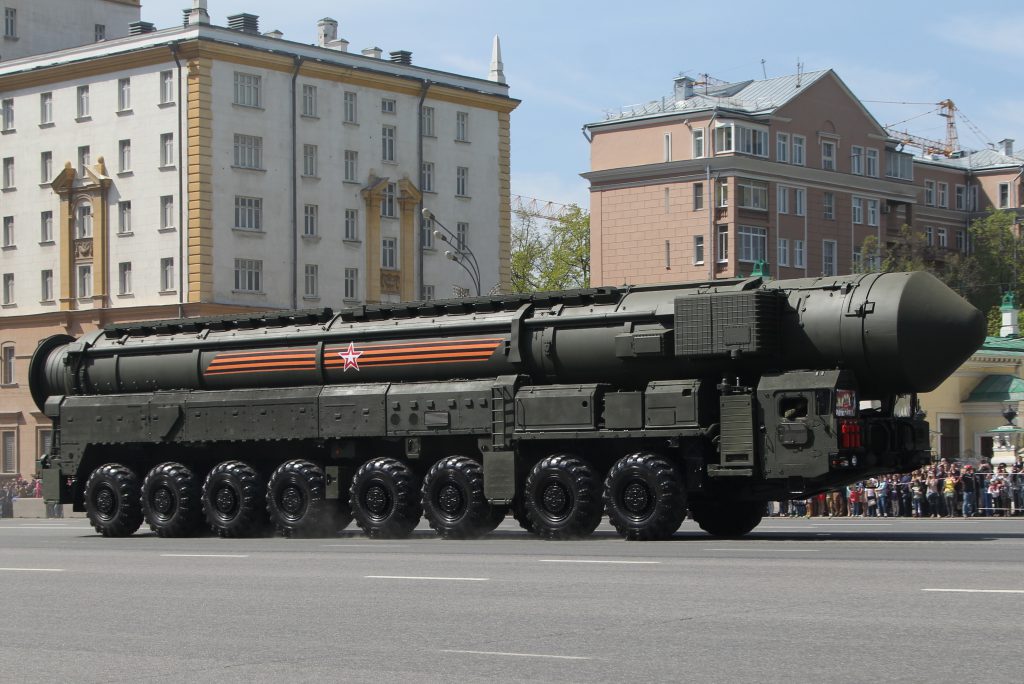
SS-18 (Wikipedia/R-36 (missile))

In this text, the main objective is tactical nuclear weapons. The purpose of strategic weapons is to support the tactical systems. When we are thinking about the difference between tactical and strategic systems the limit between those systems is lower. 

The strategic missile can have tactical missions. And the strategic missile can also have low yield warheads. Also, the tactical missile can have high-yield warheads. And modern strategic missiles can also hit targets on the battlefield. 

If some state has nuclear weapons. There is always the possibility that the state also uses them.  There are two types of nuclear weapons. Tactical and strategic. The range of tactical nuclear weapons is about a couple of hundreds of kilometers. And the range of strategic nuclear weapons is over 2000 kilometers. When we are thinking of tactical nuclear weapons most of them are highly mobile battlefield systems that can sweep the situation away from the battlefield. The yield of the warhead of those missiles is about 1kt. to 12 kt.

 During the Cold War. The Soviets planned to place medium-range R-12 (SS-4) and R-14 (SS-5) missiles in Cuba. The yield of those missile warheads was 1-2,5 mt. and the ranges of those missiles were 2000-3500 or soviet calculated the range of SS-5 about 4500 kilometers. The accuracy of those missiles was not very good. And that's why they had very high yield warheads. Those Soviet missiles had western competitor "Jupiter" tactical missiles. 


Image 2) Ranges of the Soviet missiles in the Cuban missile crisis 1962


Later the other more accurate tactical systems like  RDS-10 Pioneer (SS-20 "Saber"), Pershing 1 and 2, and cruise missiles replaced those first generations' nuclear weapons. Today strategic weapons like RT-23 (SS-24 "Scalpel" ) that were replaced by RT-2 PM Topol (SS-25 "Sickle") can have tactical duties. And the weapons, like "Iskander", can equip with nuclear or conventional weapons. The air-launched version of "Iskander" is "Kinzhal" that can use to attack against tactical and strategic targets. 

The range of those missiles depends on the size of the warhead. The fact is that in the early years of the Cold War the yield of tactical missile warheads could be 4 mt. and the range was about a couple of hundreds of kilometers. That means those missiles could be as well as dangerous to their users as targets. 

There is sometimes suspected. That some of the tactical missiles could be at the silos. For securing some routes to the countries. The tactical nuclear missile can also be a surface-to-air missile that warhead has two tactical roles. The anti-aircraft role is meant to destroy the strategic bombers and the same warheads can use against land troops. 


The tactical missiles have sometimes a "police role". In those cases, the security troops will crush the rebellion in the strategic missile bases by using tactical nuclear missiles.


But as you see there are also other systems like land, ships and aircraft launched cruise missiles, nuclear mines, and nuclear torpedoes. And then the strategic missile systems. Strategic nuclear missiles are the most powerful weapons in the world. The most feared of them is FOBS (Fractional Orbital Bombardment System) which can mean the nuclear weapon that is orbiting the Earth.

There is a contract that denies placing nuclear weapons on the orbiter. But there is the possibility that this contract has been broken. So that means there is the possibility that on the orbiter are satellites that have nuclear bombs inside them. 

There is also suspicion that miniature space shuttles like X-37B and MiG-105 "Spiral" can be used as an extreme version of the kamikaze drones. In those systems, there could be an internal nuclear weapon. 

And the rocket can rise them to the orbiter. There is the possibility that the R-36 (SS-18 "Satan") or RS-28 "Sarmat" (SS-X-29) will equip with one smaller warhead. And that thing gives those super heavy missiles the FOBS capacity. 

The most modern versions of those systems can probably return their warheads from the low Earth orbiter if those systems are not needed. All nations that have nuclear weapons have tactical and strategic weapons. 


https://en.wikipedia.org/wiki/9K720_Iskander


https://en.wikipedia.org/wiki/Boeing_X-37


https://en.wikipedia.org/wiki/Cuban_Missile_Crisis


https://en.wikipedia.org/wiki/Fractional_Orbital_Bombardment_System


https://en.wikipedia.org/wiki/Kh-47M2_Kinzhal


https://en.wikipedia.org/wiki/MGM-31_Pershing


https://en.wikipedia.org/wiki/Mikoyan-Gurevich_MiG-105


https://en.wikipedia.org/wiki/PGM-19_Jupiter


https://en.wikipedia.org/wiki/R-12_Dvina


https://en.wikipedia.org/wiki/R-14_Chusovaya


https://en.wikipedia.org/wiki/R-36_(missile)


https://en.wikipedia.org/wiki/RS-28_Sarmat


https://en.wikipedia.org/wiki/RT-23_Molode


https://en.wikipedia.org/wiki/RT-2PM_Topol


https://en.wikipedia.org/wiki/RSD-10_Pioneer


Image 1) https://en.wikipedia.org/wiki/R-36_(missile)

Image 2)https://millercenter.org/the-presidency/educational-resources/jfk-and-cuban-missile-crisis


Saturday, March 3, 2018

Nuclear weapons are the really good tool in international politics


(Picture 1)


Kimmo Huosionmaa

Nuclear weapons are the most calculated systems in the world. The strike capacity of those weapons is planned by men, who are got Nobel prizes for their scientific honors. And the person who operates those systems is selected the most intelligent process what military systems can ever create. The nuclear weapon is extremely expensive, and the most secure military equipment what mankind ever created. And they are the very good tool to make other nations to listen the owner of those weapons own ideas. If the nation has nuclear weapons, it's very easy to choose diplomatic solutions, if that nation makes something, what is normally prohibited in an international field. This is the reason, why superpowers have this kind of armament.


The new weapons of Russia are really fascinating. They would be very devastating, and some persons have asked, why the western world didn’t do this kind of weapons. The problem of Russian weapon systems is that they are so monstrous. And somebody asked once the good question, can Russian or the Soviet government do anything small. The world’s most devastating nuclear device 50 mt. the weapon can also installed to head of “Sarmat” missile, and there might be also airplanes, where that weapon is internally installed.


Those superweapons have one little problem. Their destruction range is so huge, that they can only use against Washington. If those weapons are used on the battlefield, all troops would be erased in seconds. Another way to use those weapons effectively is just detonated them under the Atlantic or Pacific surface. The underwater explosions would destroy any submarine on the ocean, but the own submarines must be warned about this kind of attack, that they could avoid the pressure wave.


When we are thinking the U.S NAVY’s situation in the South China Sea, we must say that the admirals of the fleet must know the weaknesses about those naval units. And somehow I must say that maybe those ships are decoys for some other actions. The nuclear arsenals of the United States and Russia are basically same. There are two types of weapons, what supports together. The strategic weapons are long-range missiles, what might have many types of warheads. The mobile systems survivability bases, that they are hard to locate before shooting. Fixed systems are easy to locate and they are installed in hardened silos, and their survivability bases the bunker-type solutions. Those systems can be destroyed by seismic warheads, what is penetrating in the ground before the explosion.


Fixed systems are needed for the train the missile troops because this way the political trust of personnel can be diagnosed. And “no wanted” persons like drug users and unstable personnel can cut off the system. The use of those systems as training is safer because the silo-based missiles are harder to steal than highly mobile systems. The ICBM needs two points to flight: the beginning point of flight and target point. And that’s why silo-based ICBM can launch the little bit faster than mobile systems but the time is only marginal. Satellite navigation makes the targeting the systems very fast, and the difference between those systems reaction times is the only couple of seconds.


There is one very big problem by choosing those warheads. Smaller warheads are lighter than big ones, and they can carry more in the head of the missile. Those warheads can be used against any target, what they would need to destroy. The smaller size means that they are harder to destroy than larger. But there is one problem with small warheads. They must hit precisely on target. The bigger warheads are not carried so many in same time, but they would destroy larger areas in same time. If somebody steals those warheads,  the result would be devastating. There is always the possibility of terrorist action against those missiles because those weapons are so wanted thing in the mind of fanatics.  And the problem with the selection of warheads is if the state has the only couple of large yield nuclear warheads, they can destroy easily if they would be located in space or by recon planes. But if those missiles were launched, the ability to destroy them is very low.


Mobile nuclear weapons are extremely hard to locate. But if the weapon is located it’s easy to destroy. All missile systems need fixed bases for security and service duties of those weapons. Also, ICBM’s are assembled in mobile platforms, and submarine-based ballistic missiles are “hard to find, easy to kill” weapons. Tactical nuclear weapons are supporting strategic weapons by destroying enemy troops or aircraft what attacks the missile site. And those weapons are used as “police armament” if the commanders of strategic nuclear weapons are rebellious. There is actually no direct line between tactical or strategic nuclear weapons, and long-range strategic systems can also use to support the situation on the battlefields around the world. One thing what we must notice is that the USA or other western nation would say any world against “Sarmat” missile. So we must say that no nation would uncover their best weapons.

Sources:


Picture 1


http://crisisofdemocracticstates.blogspot.fi/p/nuclear-weapons-are-really-good-tool-in.html

Thursday, March 1, 2018

The “Sarmat” missile


"Sarmat" missile
(Picture 1)


Kimmo Huosionmaa

“Sarmat” is nothing like any other ICBM. This weapon is mobilized version of the SS-18 (R36) missile, what was the largest thermonuclear weapon in the world. It has more warheads and capacity to raise those weapons in the orbital trajectory. This weapon is actually FOBS (Fractional Orbital Bombardment System”, what is tested by the Soviet Union and the possible USA in 1960’s. Those weapons have huge weapons load, what makes them very terrible. In those weapons is MIRV (Multiple Independently Targeted Reentry Vehicles) what can be targeted to same target or different places around the world. This kind of FOBS-weapons can send to orbital trajectory weeks or even years before shooting order.


They can play normal satellites, and when the order of action comes, the satellite would start to drop nuclear weapons to their targets. This eliminates the way to locate those weapons by using its communication signals as the tip. If those weapons could be located, there is the way to target them with high-altitude ASAT systems. The thing why those nuclear weapons would not locate very easily is that they can work with the normal satellites. And when those weapons are needed, the programs of the computers must only change, what makes those satellites the ultimate killers.


Those warheads are actually independently targeted and they can use like carpets, where all warheads would be put in the same place. But those FOBS weapons have the very frightened capacity, that they could be sent to the orbital trajectory, and then dropped one by one in many targets, what is separated from together. Also “Sarmat” can drop one warhead and leave other to MIRV-bus waiting for next target. Those weapons can be programmed to explode in the orbital trajectory, in the atmosphere or they can program to hit the ground in the line, and that kind of weapons can destroy even the command center of NORAD.


FOBS capacity makes that weapon so terrible. It can be used against highly mobile targets, and it can threat also U.S task fleet and submarines. Those weapons would be used with reconnaissance satellites, what are looking for “hard to find easy to kill” targets for that weapon. The capacity to use one warhead by one is because this weapon must find those highly mobile targets before it can take effect to them.

Sources:

https://en.wikipedia.org/wiki/Fractional_Orbital_Bombardment_System

https://en.wikipedia.org/wiki/R-36_(missile)

https://en.wikipedia.org/wiki/RS-28_Sarmat

Picture 1.

https://www.aspistrategist.org.au/wp-content/uploads/2017/02/PC-24_%C2%AB%D0%AF%D1%80%D1%81%C2%BB-1024x684.jpg

https://crisisofdemocracticstates.blogspot.fi/

http://crisisofdemocracticstates.blogspot.fi/p/the-sarmat-missile.html

Memory manipulation can be a tool. That removes bad memories.

But who makes the decision? What are bad memories?  The ability to select memories. It is a new thing. For. Psychotherapy. But those things ...