Tuesday, May 9, 2023

The Dunning-Kruger effect is at least partially debunked by the math professor.


The Dunning-Kruger effect is at least partially debunked by the math professor. 


Debunking the Dunning-Kruger effect – the least skilled people know how much they don’t know, but everyone thinks they are better than average. The question is how Dunning and Kruger estimated the skills of those people. Did they estimate real skills or how many courses those people passed? And did they use some other student group than their own? The thing is that people like data processing students might have excellent skills in things like programming even if they are not yet taken any courses in that thing. 

Dunning and Kruger used fictional people in that test for making the control solutions. The problem is how control-people who do not exist give solutions. The form that those persons used was like a lottery ticket. That means somebody makes the cross on the paper. And then the work is done. 

But then we must ask who fills those forms. The problem with lottery tickets is that they show everything in black and white. If there are lots of questions. That means somebody will fill them in randomly without thinking about their answers. Or maybe they don't even read questions. And the second thing is that person cannot justify, or tell why that man or woman gave that answer. 


"David Dunning and Justin Kruger tested psychology students to see whether the least skilled were also the most unaware.(ScitechDaily.com/Math Professor Debunks the Dunning-Kruger Effect)


That is easy to manipulate. If the test controller puts those crosses on paper, that thing causes an effect where those control people are giving answers to what the maker of that test wants.  Another thing is that even if those questions are about psychology and the person, who puts the answer to paper is a professor of psychology, that person should have better skills in those things than the average person. 

The model of that question paper, which accepts only crosses in the balls causes criticism against that query. People who participate in that examination have a chance to justify and explain why that person answered like how that person answered. 


"When students are asked to rate their ability objectively, they do much better than when they compare themselves with their peers". (ScitechDaily.com/Math Professor Debunks the Dunning-Kruger Effect)


The Dunning-Kruger effect means the overestimation of own skills. The criticisms against that effect base theorem are that Dunning and Kruger, the professors of psychology at Cornell University put too much weight to the courses and training of the people, who participate in their examination. 

That means Dunning and Kruger didn't measure the real skills of people. They measured the courses that those people performed. They didn't even ask, did some of their student repaired cars. They measured courses, not other things. I don't know did they even ask some other students like History or mathematical students their test. Or did they just select psychology students to make those tests? 

The thing that causes criticism against the Dunning-Kruger effect is that the theorem says that "because you don't have enough courses, you are stupid". And that is the underestimation of people. The Dunning-Kruger effect is the cornerstone when people are beating people who don't follow the main road. The message of that effect is that everybody who disagrees with the majority is somehow stupid. 

The majority means that if something is accepted it would not be allowed to criticize. And if that is the attitude that even researchers should not do about some well-known things that people think as facts. Because something is against the theorems made a couple of hundred years ago, that thing is the Dunnig-Kruger effect. 

The thing is that the Dunnig-Kruger effect or methodology used in those papers supported the idea that when people are studying something they don't open any other books than just their study books. So when that effect was described, those professors selected sources, that supported older student's authority. And the major message of the Dunnig-Kruger effect is that people who don't accept things, that are published are simply stupid. And that thing means that this thing will make somebody angry. 


https://scitechdaily.com/math-professor-debunks-the-dunning-kruger-effect/


The same article is in Conversation. 

https://theconversation.com/debunking-the-dunning-kruger-effect-the-least-skilled-people-know-how-much-they-dont-know-but-everyone-thinks-they-are-better-than-average-195527


*****************************************************************************

The article from ScitechDaily.com and the conversation are under this text. The next-part is copy-paste from ScitechDaly.com. 

I'm not author of the next part of text. 


Math Professor Debunks the Dunning-Kruger Effect


Debunking the Dunning-Kruger effect – the least skilled people know how much they don’t know, but everyone thinks they are better than average.

The Dunning-Kruger effect, which claims that the least skilled individuals consistently overestimate their abilities, has been debunked as a mathematical artifact rather than a reflection of human cognition. The majority of people can actually gauge their competence and knowledge accurately.

John Cleese, the British comedian, once summed up the idea of the Dunning–Kruger effect as, “If you are really, really stupid, then it’s impossible for you to know you are really, really stupid.” A quick search of the news brings up dozens of headlines connecting the Dunning–Kruger effect to everything from work to empathy and even to why Donald Trump was elected president.

As a math professor who teaches students to use data to make informed decisions, I am familiar with common mistakes people make when dealing with numbers. The Dunning-Kruger effect is the idea that the least skilled people overestimate their abilities more than anyone else. This sounds convincing on the surface and makes for excellent comedy. But in a recent paper, my colleagues and I suggest that the mathematical approach used to show this effect may be incorrect.

What Dunning and Kruger showed

In the 1990s, David Dunning and Justin Kruger were professors of psychology at Cornell University and wanted to test whether incompetent people were unaware of their incompetence.


What Dunning and Kruger Found


To test this, they gave 45 undergraduate students a 20-question logic test and then asked them to rate their own performance in two different ways.

First, Dunning and Kruger asked the students to estimate how many questions they got correct – a fairly straightforward assessment. Then, Dunning and Kruger asked the students to estimate how they did compared with the other students who took the test. This type of self-assessment requires students to make guesses about how others performed and is subject to a common cognitive mistake – most people consider themselves better than average.


Research shows that 93% of Americans think they are better drivers than average, 90% of teachers think they are more skilled than their peers, and this overestimation is pervasive across many skills – including logic tests. But it is mathematically impossible for most people to be better than average at a certain task.

After giving students the logic test, Dunning and Kruger divided them into four groups based on their scores. The lowest-scoring quarter of the students got, on average, 10 of the 20 questions correct. In comparison, the top-scoring quarter of students got an average of 17 questions correct. Both groups estimated they got about 14 correct. This is not terrible self-assessment by either group. The least skilled overestimated their scores by around 20 percentage points, while the top performers underestimated their scores by roughly 15 points.

The results appear more striking when looking at how students rated themselves against their peers, and here is where the better-than-average effect is on full display. The lowest-scoring students estimated that they did better than 62% of the test-takers, while the highest-scoring students thought they scored better than 68%.

By definition, being in the bottom 25% means that, at best, you will score better than 25% of people and, on average, better than just 12.5%. Estimating you did better than 62% of your peers, while only scoring better than 12.5% of them, gives a whopping 49.5 percentage-point overestimation.

The measure of how students compared themselves to others, rather than to their actual scores, is where the Dunning–Kruger effect arose. It grossly exaggerates the overestimation of the bottom 25% and seems to show, as Dunning and Kruger titled their paper, that the least skilled students were “unskilled and unaware.”

Using the protocol laid out by Dunning and Kruger, many researchers since have “confirmed” this effect in their own fields of study, leading to the sense that the Dunning–Kruger effect is intrinsic to how human brains work. For everyday people, the Dunning-Kruger effect seems true because the overly arrogant fool is a familiar and annoying stereotype.

Test Answer Bubble Sheet Scantron

When students are asked to rate their ability objectively, they do much better than when they compare themselves with their peers.


Debunking the Dunning-Kruger effect

There are three reasons Dunning and Kruger’s analysis is misleading.

The worst test-takers would also overestimate their performance the most because they are simply the furthest from getting a perfect score. Additionally, the least skilled people, like most people, assume they are better than average. Finally, the lowest scorers aren’t markedly worse at estimating their objective performance.

To establish the Dunning-Kruger effect is an artifact of research design, not human thinking, my colleagues and I showed it can be produced using randomly generated data.

First, we created 1,154 fictional people and randomly assigned them both a test score and a self-assessment ranking compared with their peers.

Then, just as Dunning and Kruger did, we divided these fake people into quarters based on their test scores. Because the self-assessment rankings were also randomly assigned a score from 1 to 100, each quarter will revert to the mean of 50. By definition, the bottom quarter will outperform only 12.5% of participants on average, but from the random assignment of self-assessment scores they will consider themselves better than 50% of test-takers. This gives an overestimation of 37.5 percentage points without any humans involved.

To prove the last point – that the least skilled can adequately judge their own skill – required a different approach.


My colleague Ed Nuhfer and his team gave students a 25-question scientific literacy test. After answering each question, the students would rate their own performance on each question as either “nailed it,” “not sure” or “no idea.”

Working with Nuhfer, we found that unskilled students are pretty good at estimating their own competence. In this study of unskilled students who scored in the bottom quarter, only 16.5% significantly overestimated their abilities. And, it turns out, 3.9% significantly underestimated their score. That means nearly 80% of unskilled students were fairly good at estimating their real ability – a far cry from the idea put forth by Dunning and Kruger that the unskilled consistently overestimate their skills.

Dunning–Kruger today

The original paper by Dunning and Kruger starts with the quote: “It is one of the essential features of incompetence that the person so inflicted is incapable of knowing that they are incompetent.” This idea has spread far and wide through both scientific literature and pop culture alike. But according to the work of my colleagues and me, the reality is that very few people are truly unskilled and unaware.

The Dunning and Kruger experiment did find a real effect – most people think they are better than average. But according to my team’s work, that is all Dunning and Kruger showed. The reality is that people have an innate ability to gauge their competence and knowledge. To claim otherwise suggests, incorrectly, that much of the population is hopelessly ignorant.


https://scitechdaily.com/math-professor-debunks-the-dunning-kruger-effect/


https://webelieveinabrightfuture.blogspot.com/


Monday, May 8, 2023

Are super-earth habitable planets?


That depends on the planet, its atmosphere, and its temperature. Super-earths are giant rocky planets. And theoretically, they could offer harbor for similar lifeforms as on Earth. The reality is another. Most of those super earths are orbiting red dwarfs. And that thing makes the locked. That means the temperature on the dayside is extremely hot. And the nightside is freezing. Very powerful winds are stabilizing the temperatures on those very strange worlds. 

The thing is that theoretically, the super-earth could host lifeforms that can communicate with us if they have a similar atmosphere to Earth. But of course, there could be lifeforms that are separating oxygen from some chemical compounds. But there is a possibility that the rocky exoplanet is too close to its star, and that causes the situation that the shell will turn to liquid stones. And the temperature would be higher than on Venus.


"A comparison of Earth, at right, with a theorized super-habitable planet, at left. In theory, planets orbiting lower-mass stars than our Sun, with slightly larger radii and masses than our planet, and closer to the centers of their so-called habitable zones may be more likely to have life survive and thrive, and be home to greater biodiversity than Earth. Without evidence, this idea is tantamount to little more than guesswork". (BigThink.com/Why “super-Earth” exoplanets are a scientific catastrophe)


"The more than 5,000 exoplanets confirmed in our galaxy so far include a variety of types – some that are similar to planets in our Solar System, others vastly different. Among these are a variety we lack in our Solar System that are largely mis-named “super-Earths” because they are larger than our world. However, all but the hottest planets that are more than about ~130% of Earth’s radius will likely be mini-Neptunes, not super-Earths, and their potential habitability remains dubious, despite the contrary assertions of a few vocal exoplanet scientists". (BigThink.com/Why “super-Earth” exoplanets are a scientific catastrophe)


"The CHEOPS mission discovered three planets around the star Nu2 Lupi. The innermost planet is rocky and contains only a thin atmosphere, while the second and third planets discovered have large, volatile-rich envelopes. Although some are still calling them super-Earths, it’s very clear that not only are they not rocky, but most of the planets we call super-Earths are not like Earth at all in any meaningful way". (BigThink.com/Why “super-Earth” exoplanets are a scientific catastrophe)

Exoplanets with very strong gravitation can host oceans even if the temperature is very high because strong gravitation keeps water liquid. But those oceans would be boiling. Another thing is that the temperature on lightweight Earth can be hellish because the atmosphere is moving so fast. And that causes ultra-strong friction. 

Super-earths are opening new visions for the SETI- and life search. But the problem is that the stars mean much more than the planet itself. Or otherways saying: the planet and the star must both have the right conditions that life can form. The lifeforms on those exoplanets might be different than we even think. But the thing is that the super-earths are confirming that there are large rocky planets. 

Confirming the existence of lifeforms in places like water worlds is not as simple a mission as possible. The water worlds are planets that are covered by oceans. On those planets, friction is very low. And that forms powerful winds that travel around the planet. That wind can turn the temperature on those planets very hot. But if that planet is at a longer distance, that wind can keep oceans open. And that is vital for photosynthesis. But that water would be boiling.  Maybe those organisms are living in-depth and use volcanic temperatures. 

But when we are trying to make models about planets that can host lifeforms we are in trouble. And that is the reason why we must research all exoplanets separately. Lifeforms that are formed on those planets are unique. And they are adapted to their environment. That adaptation means that the lifeforms that are formed on hostile planets, or planets that are hostile to us means that the distant planet would be paradise for those organisms. 


Once astronomer Carl Sagan introduced a model about the lifeforms that hover in Jupiter's atmosphere. Those lifeforms would be like medusas that hover in that gas giant's atmosphere. Sagan's idea is meant for a theoretical model. But it's interesting.

That means lifeforms can exist also in the atmospheres of gas giants. Maybe they are not on Jupiter. But the fact is, that Jupiter is not the only gas giant in the universe. 

Those lifeforms would be primitive, but they are a good example of why searching for lifeforms is difficult. There are lots of possibilities. And astronomers must search all of them. In some other models, the lifeforms can be very local. In that model, a single valley on some exoplanet can be the harbor for lifeforms. 

Things like BLC-1- and WoW! signals have one problem. Nobody knows when those transmissions look began. Lots of data stored in those natural, or artificial signals can lose because nobody knows when that signal began. And the other thing is that nobody confesses to interview aliens. So when we are searching for aliens we don't know what we should search. 

And the thing is that those signals' background is open. The thing is that nobody confessed to being behind those messages. 


 But then we are facing another reality. The lifeform is different than intelligent lifeforms. 

We always hoped that intelligent aliens will answer to us. The problem is that maybe aliens, even if they see us want to research us before they answer. And there is a possibility that the lifeform is at a lower technical level than we are.  The culture of those aliens could be different. And in some models, those aliens will not know. That they get the message from us. 

Another possibility is that aliens will not listen to the same frequencies that we will listen to. Or maybe our attempts to make contact is lost in the cosmic hum, which means nobody can hear those transmissions. Or our transmissions do not reach the alien home planet. There are billions of possibilities for why we don't get answers from aliens. 


https://bigthink.com/starts-with-a-bang/super-earth-catastrophe/

Thursday, May 4, 2023

The mystery of the Mayan calendar causes interesting thoughts.

Could this calendar have some kind of connection with eugenics? This text includes parts that are close to UFO theories. So believe it or not. But the main question is what ancient Mayans made with a calendar which year is in 45 years period. "Anthropologists from Tulane University have potentially cracked the ancient Mayan 819-day calendar mystery. They discovered it aligns with the synodic periods of all visible planets over 20 cycles (about 45 years), not the previously thought four cycles. This insight reveals the ancient Maya’s profound understanding of astronomy and the complexity of their calendar systems". (ScitechDaily.com/Bridging Time and Space: Researchers Decipher Ancient Mystery of Maya Calendar)

Why the year in this calendar stays 819 days? And the biggest question is what the Mayans who made that mystery calendar made with the year, that lasted 45 years. Scientists hacked the code of the Mayan calendar and noticed one remarkable thing. In this mystery calendar, the year is marked as 819 days long. There is a period about 20 times that time. And that is about 45 years. So what is the reason for that "year"? 


"The long-standing mystery of the ancient Mayan 819-day calendar has been potentially deciphered by anthropologists from Tulane University, who found the calendar to be in sync with the synodic periods of all visible planets from Earth. Earlier, it was thought that the calendar referred to four cycles of 819 days, but this didn’t align with the synodic periods of Mercury, Venus, Mars, Jupiter, and Saturn. Instead, the researchers found that 20 cycles of 819 days, equating to about 45 years, align with the synodic periods of all these planets". (ScitechDaily.com/Bridging Time and Space: Researchers Decipher Ancient Mystery of Maya Calendar)


"The Mayan calendar not only tracks the planets’ position in the night sky but is also linked to key dates and celebrations. This breakthrough research sheds light on the sophisticated astronomical knowledge of the ancient Maya and helps to decode the complex Mayan calendars." (ScitechDaily.com/Bridging Time and Space: Researchers Decipher Ancient Mystery of Maya Calendar)

Why is that calendar encoded like that? There were marks that the calendar must rotate 20 times. Those 5 balls (or spiral-shaped structures) at the edge of four squares might be orders that the number of corners of those squares must count by using the number 5. 

There is a theory about the Antarctica pyramids. Sometimes those pyramids were claimed to be made by aliens. But there is a little bit more earthy theory about those Antarctean pyramids. In this theory, the Antarctic pyramids are real, made by South American Indians. There is a possibility that those Indians used "natural" pyramids in some most secretive rituals, that they had. And they were reserved for rituals of the highest-ranking Mayan or Inca priests. We know that the Inca the king of Inca Indians made children with their siblings. So could that thing have something to do with eugenics and pure-line genetic engineering? 


Are those things real pyramids? They could be natural rocks, but the Indians could sculpt those rocks and use them in secretive rituals. But maybe they are only rocks... 

Antarctica is the giant natural freezer. And in Antarctica is possible to store embryos in the ice. UV radiation is not as strong on the coasts of Antarctica as it's on the Andes. That means the genetic material will not be harmed so easily as in the Andes. 

Is there something or somebody who comes in 45 years of sequence? And if we think that the pyramids in Antarctica have something to do with that thing, we might even think, that some kind of embryo is released in 45 years period. There is the possibility that Mayan Indians visited Antarctica. And maybe there was some very interesting ceremony. In that theory, the Mayan priests would transfer the superhuman, made by using pure lines, to the womb. If that thing is true those Mayns should keep that thing very secretive. And maybe that thing was made in Antarctica away from the eyes of regular people. 

The pure lines are used in horse genetic processing. And that method can use also for humans. Eugenics is introduced as the reason why the Incas made children with their siblings. And if there are two degenerated people their child would be genetically stronger than otherwise. The 45 years period is always interesting. If we think that the Mayan king will rise to power at the age of 20, that king would be 65 after that period. 

https://scitechdaily.com/bridging-time-and-space-researchers-decipher-ancient-mystery-of-maya-calendar/


Images 1 and 2: ) https://scitechdaily.com/bridging-time-and-space-researchers-decipher-ancient-mystery-of-maya-calendar/


Image 3: 

http://www.antarcticstation.org/news_press/news/the_belissima_team_returns_to_the_princess_elisabeth_station/

Sunday, April 16, 2023

ESA's JUICE mission successfully lift-off from French Guiana.

The Juice (Jupiter Icy Moons Explorer) is ready for the challenge. The main goal of that mission is to research and explore the secrets of Jupiter's icy moons Io, Europa, Ganymede, and Callisto. Each of those icy moons involves more water than on Earth. And at least in Europa is the ocean, which means there could be lifeforms. The magnetic fields of those moons mean that they could offer harbor for very special lifeforms that are very similar to the first bacteria on Earth. 

The thing that makes water liquid on those moons is Jupiter's tidal forces. And in some vision of the future, during space missions, the first colonists could create a space station in the oceans of those icy moons. The water layer protects the crew against powerful cosmic radiation. But that thing requires that the flow of water would be slow enough. 


Juice's lift-off from French Guayana. 


"ESA’s latest interplanetary mission, Juice, lifted off on an Ariane 5 rocket from Europe’s Spaceport in French 09:14 local time/14:14 CEST on April 14 2023 to begin its eight-year journey to Jupiter, where it will study in detail the gas giant planet’s three large ocean-bearing moons: Ganymede, Callisto, and Europa. Credit: ESA – M. Pédoussaut" (ScitechDaily.com/Jupiter’s Icy Enigmas: ESA’s Juice Launches on a Cosmic Treasure Hunt)


In the artist’s impression of Juice, which is not to scale, Ganymede is shown in the foreground, Callisto to the far right, and Europa center right. Volcanically active moon Io is also shown, at left. The moons were imaged by NASA’s Galileo spacecraft; Jupiter is seen here with a vivid aurora, captured by the NASA/ESA Hubble Space Telescope. Credit: Spacecraft: ESA/ATG medialab; Jupiter: NASA/ESA/J. Nichols (University of Leicester); Ganymede: NASA/JPL; Io: NASA/JPL/University of Arizona; Callisto and Europa: NASA/JPL/DLR  (ScitechDaily.com/Jupiter’s Icy Enigmas: ESA’s Juice Launches on a Cosmic Treasure Hunt)


"Overview of ESA and NASA missions that have visited or will visit Jupiter.
On the left of the timeline are spacecraft designed to orbit the gas giant, with the stated date range from arrival at Jupiter to end of mission. On the right of the timeline are spacecraft that have flown by Jupiter on their way to the more distant reaches of the Solar System; the stated dates show the year that the spacecraft flew past the gas giant".(ScitechDaily.com/Jupiter’s Icy Enigmas: ESA’s Juice Launches on a Cosmic Treasure Hunt)

"ESA’s Jupiter Icy Moons Explorer (Juice) mission launched on April 14, 2023, to make detailed observations of the giant gas planet and its three large ocean-bearing moons – Ganymede, Callisto and Europa – with a suite of remote sensing, geophysical and in situ instruments". (ScitechDaily.com/Jupiter’s Icy Enigmas: ESA’s Juice Launches on a Cosmic Treasure Hunt)

"Juice will characterize these moons as both planetary objects and possible habitats, explore Jupiter’s complex environment in depth, and study the wider Jupiter system as an archetype for gas giants across the Universe".(ScitechDaily.com/Jupiter’s Icy Enigmas: ESA’s Juice Launches on a Cosmic Treasure Hunt)

"The first person to view Jupiter and its largest moons through a telescope was Galileo Galilei in 1609. Over 400 years later and humanity’s ever-long desire to look up and explore worlds beyond our own lives on; Juice will carry a commemorative plaque, as a tribute to the Italian astronomer.
Credit: ESA (Acknowledgement: work performed by ATG under contract to ESA), CC BY-SA 3.0 IGO"(ScitechDaily.com/Jupiter’s Icy Enigmas: ESA’s Juice Launches on a Cosmic Treasure Hunt)


"ESA’s Ariane 5, manufactured by ArianeGroup, has been in operation since 1996 and has already completed more than 100 launches from Europe’s Spaceport in French Guiana. It is 53 m high and 5.4 m in diameter with a liftoff mass of 780 tonnes.The Jupiter Icy Moons Explorer (Juice) will be the last ESA mission to launch on an Ariane 5 before Ariane 6 takes over. Credit: ESA (Acknowledgment: work performed by ATG under contract to ESA), CC BY-SA 3.0 IGO" (ScitechDaily.com/Jupiter’s Icy Enigmas: ESA’s Juice Launches on a Cosmic Treasure Hunt)


"ESA’s Jupiter Icy Moons Explorer (Juice) is set to embark on an eight-year cruise to Jupiter starting in April 2023. The mission will investigate the emergence of habitable worlds around gas giants and the Jupiter system as an archetype for the numerous giant planets now known to orbit other stars.
On its journey, Juice will make a series of flybys of Earth, the Earth-Moon system and Venus to set it on course for its July 2031 rendezvous in the Jovian system. Juice will make three Earth flybys during its cruise: one of the Earth-Moon system in August 2024, one of Earth in September 2026, and once again one of Earth in January 2029".(ScitechDaily.com/Jupiter’s Icy Enigmas: ESA’s Juice Launches on a Cosmic Treasure Hunt)

"In total Juice will spend approximately eight years cruising to Jupiter. It will reach Jupiter in July 2031, but will already begin making scientific observations six months before entering orbit around Jupiter. Juice will go on to spend many months orbiting Jupiter, making 35 flybys of icy moons Europa, Ganymede and Callisto, and finally conducting an orbital tour of Ganymede.
Credit: ESA (Acknowledgment: work performed by ATG under contract to ESA), CC BY-SA 3.0 IGO" (ScitechDaily.com/Jupiter’s Icy Enigmas: ESA’s Juice Launches on a Cosmic Treasure Hunt)


And another requirement for those stations is there are no lifeforms in those oceans. If there are lifeforms that thing limits the use of that water. Then those icy moons' water could use as fuel for small rockets that are taking samples from those moons and research the Jupiter system. In that system, the electrolysis will split water molecules into hydrogen and oxygen. 

That is suitable for rocket fuel. When we think of the possibility that some kind of submarine will send to those moon's oceans that system could be a rocket that lands on the ice layer. And then it simply melts the ice hole by using its rocket engines. Then the craft can operate under the ice by using the propellers. The rocket could look like the rocket from the Tintin cartoon. The pontoons and propellers are the chambers around the main engine. 

The system can use a rocket engine or resonance to break the hole in the ice. And then it can fill the water tanks that take it into the water where it travels by using propellers. The system can also use MHD (Magneto-Hydrodynamic Drive) while it operates underwater. When that futuristic rocket submarine must change its moon, it can make a hole in the ice and then rise by using a rocket engine. This kind of thing could be possible in the future. 


The Juice-mission profile is on film above this part of the text. 


As you see the long travel to Jupiter is a problem. The Juice probe will be there in 2031. And that means for making colonies on Jupiter and its icy moons requires more effective rocket technology than we use today. One of the reasons why flight time to that planet is so long is that the craft must slow its speed before it can place itself in the orbital trajectory. When the probe slows it's speed. It must use the brake engine or so-called gravitational brake. 

If a craft uses brake engines it must use the same fuel mass or create as much energy as it as it used to travel to that planet. In that version, the craft requires very much fuel. That it can transform into energy. The gravitational brake is an oppositely operating gravitational sling that is used to send probes to the outer solar system. In the journey's first stage, the Juice probe uses a gravitational sling to give enough energy to it. That it can travel to the Jupiter system. 

In gravitational brake, the spacecraft travels past the gravitational center. And then that gravitational center will pull it backward like Yoyo. The craft would slow its speed by benefiting the Sun's and Jupiter's gravitational fields. So, at first, the Juice probe benefits the inner planet's and the Sun's gravitational field to increase its speed. 

And then in the final part of the stage where it takes its position on Jupiter's orbiter, the probe will slow its speed by using a gravitational brake. One version of that thing is the position where Jupiter, its moons, and the Sun are in the line. And that gravitational situation slows its speed.  

https://scitechdaily.com/jupiters-icy-enigmas-esas-juice-launches-on-a-cosmic-treasure-hunt/


Wednesday, March 22, 2023

The Pentagon suggests that the alien mothership could send miniature probes to Earth.

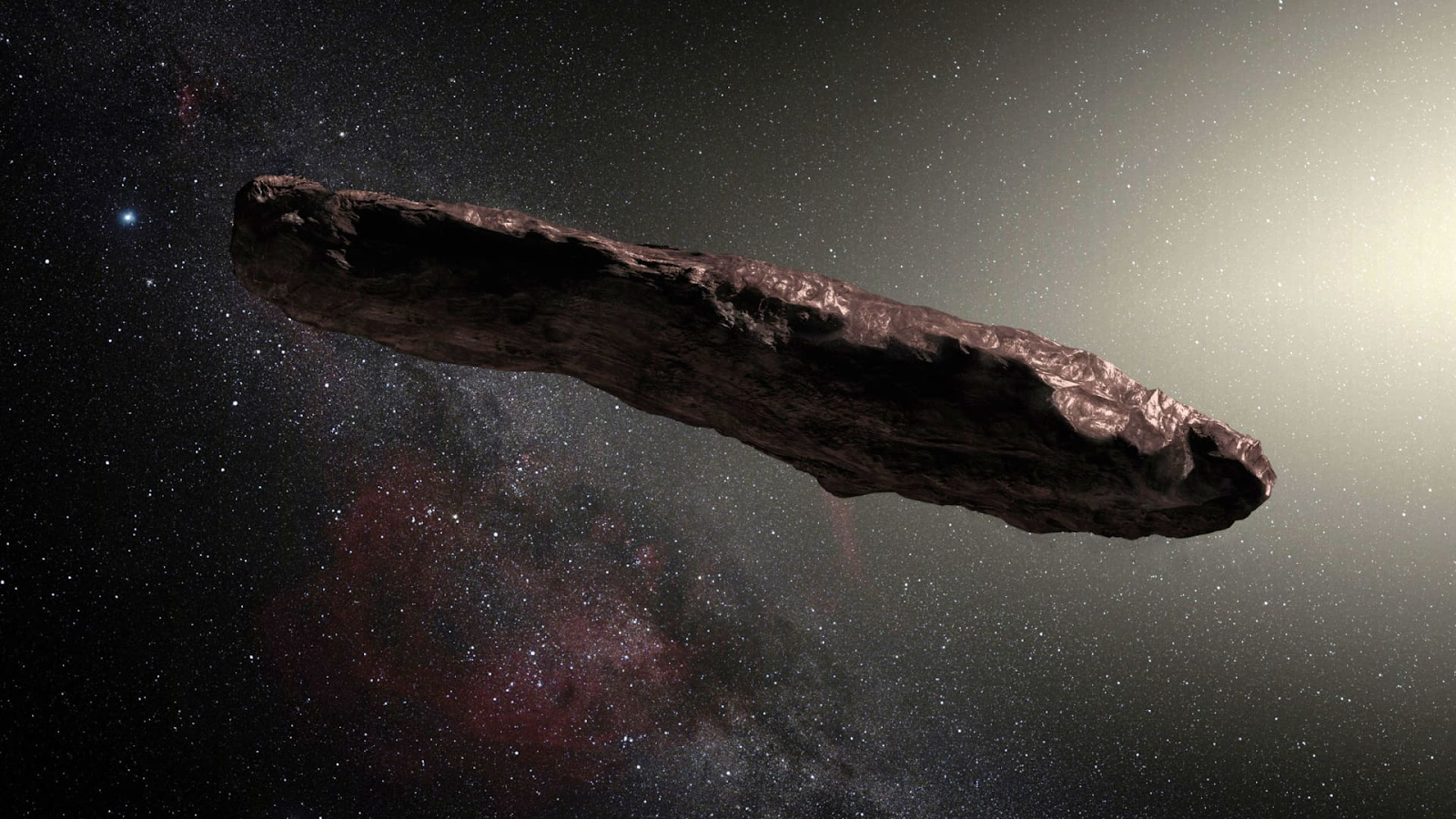
This is an interesting theory. The thing is that the asteroid Oumumua from another solar system also suggested being the alien probe. The fact is that nobody detects the signals from the Oumuamua anywhere, but if that thing is a probe, it could use something that we might call "old fashion". The fact is that no human ever landed on that asteroid. So there is space for the hypothesis. That theory about the Oumumua as the interstellar probe introduced some Harvard astronomers. There are theoretical models of what the alien probe might look like, how it might act, and how it might be undetected. In some visions, the alien probe uses nanotechnical mechanic computers.  

And if that probe is a so-called SETI probe the mission is to search the unknown intelligence, that probe will travel in the solar system by only its passive systems. So that probe remains stealth if it plays an asteroid. And the system might use stealth technology where the craft is covered by ice. The probe can use superconducting technology where the tape records interesting signals by using antennas. That is covered by an icy shell. And that thing helps to keep the probe undetected. 


The image above)  Artist's vision of Oumuamua


The image above) David A. Hardy's vision of asteroid spacecraft. 


Many times, we think that interstellar travel is impossible because that thing requires faster-than-light technology. Because of the huge distances in the universe. We think that space travelers will not ever visit our solar system. The great distances between stars guarantee that the crew will not ever see their home planet. Or senders of that crew will not ever meet them again. 

But there is the possibility that the aliens think otherwise than we think. There is also the possibility that the stations or planets that send the probes are covered by using ion whirl that travels at the speed of light. If both participants of the space trip the sending station and spacecraft are using the Tipler Cylinder, the structure where the time is very strongly dilated or even stopped. That system allows the senders can meet the travelers again. 

If the time dilation is done otherways than using faster-than-light technology like covering the craft with a cylinder that rotates with the speed of light, that allows routine interstellar missions. And the only thing is that both the sender and the craft must use time dilation so that they can travel between stars and then bring their crew back from that mission. 


https://edition.cnn.com/2018/11/06/health/oumuamua-alien-probe-harvard-intl/index.html

https://futurism.com/harvard-professor-defends-claim-oumuamua

https://nypost.com/2023/03/15/pentagon-officials-suggest-alien-mothership-in-our-solar-system-could-send-mini-probes-to-earth/

https://visionsoftheaiandfuture.blogspot.com/2023/03/enormous-scale-time-dilation-can-make.html


https://en.wikipedia.org/wiki/Tipler_cylinder

Thursday, March 9, 2023

The mysterious "Henge" in Poland might have a more conventional explanation than some "antigravitational machine".

 The mysterious "Henge" in Poland might have a more conventional explanation than some "antigravitational machine". 

The change could have three parts. The container fills with mercury. The flying machine called "The Bell" ("Die Glocke")and the henge act as the protective building. The container filled with mercury will put to rotate, and that thing forms the parabolic mirror. Then the "Scauberger's vortex generator" will be put just in the middle of that parabolic mirror. Another mirror will focus sunlight on the parabolic mirror. 

The focused sunlight causes extremely fast rising air statues that put the vortex machine rotate very fast. That container acts as a generator that creates electricity which pushes the "Bell" upward. The idea was that electricity created in the generator will conduct to the "Bell". So the "Bell" was not an antigravitational machine. It used the electromagnetic vortex for creating thrust. The idea was to create an electromagnetic rocket engine that could use in ME-262 and other kinds of flying machines. 


But the tale about the "time machine". 


There is a possibility that the man behind this tale was  Frank Tipler when he analyzed the Henge he created the Tipler Cylinder. There is the possibility to create a system that uses virtual crossing the speed of light for creating the time reverse. The idea was that two ion fields are rotating in the magnetic henge. 

The circles of high-speed ions can make it possible where time dilates. Then researchers will put the third ion flown to rotate in the opposite direction of those ions in the outer layer. That thing causes the virtual crossing at the speed of light. Or there are multiple fast-rotating shells. And that thing makes it possible to make the time dilation or time reverse.

Time travel means jumping between energy levels. The border of the fourth dimension is the energy maximum in our universe. The fourth dimension starts when the energy difference between two objects increases so high that interaction between objects cuts. And if the object must travel backward in time its energy level must decrease below the energy minimum in the universe. 

The idea of time travel is a very simple thing. it's jumping between energy levels, as I just wrote. We must just create the energy level that puts particles to jump away from the universe to the upper energy level. And if we think that time travel is just jumping between energy levels we might think that this thing is quite easy to make. 


https://en.wikipedia.org/wiki/Tipler_cylinder


Wednesday, March 8, 2023

Did Leonardo da Vinci know how generators work?

 Did Leonardo da Vinci know how generators work?


There is a possibility that Mesopotamian priests knew how to store natural electricity. That means those priests just put metal sticks on the wooden layer. And then flashes of lightning loaded electricity to that merchandise. That thing would be very impressive in the eyes of regular people. There is the possibility that ancient Mesopotamians created electricity by hitting quartz crystals with hammers.But did they know the generator?

The image above this text is from Mesopotamia. There is a possibility that it portrays some kind of generator. In that system, the capillary effect pulls liquid through the tube. And then the falling liquid will rotate the mill wheels. That allows the creation of hydro plants in places where is no water. And that kind of system is always interesting. These kinds of systems can be useful in modern times to create hydrogen and oxygen for aviation systems. 


Image 2) Hero's aeolipile (Wikipedia, Aeolipile) 

So who invented generators? The fact is this. Even ancient people knew a mineral called magnesite. The magnesite can use to create electricity by benefiting rotating movement. And things like Leonardo's screw (Leonardo's helicopter) can use to rotate the water bowl that floats on the water tank. 

Image 3) Leonardo da Vinci's helicopter. The same system can also operate as a generator. 

There is the possibility that generators were invented a long time before Edison or Tesla. There is the possibility that in the water tank or some other water bowl is the chassis. There is magnetized iron or magnesite. The screw or aeolipile puts that round-shaped chassis rotate in the water bowl where are magnets at its walls. That system works as a generator. The best thing for that purpose would be mercury. The chassis will put to rotate on that liquid. And it makes the system create electricity that operators can use as fuel. 


Viktor Schauberger's vortex generator can also use to create hydrogen. That means the mysterious V-5 "Nazi-UFO" can be more realistic than we ever imagine. The idea could be that the aviation device uses Schauberger's generator for making hydrogen and oxygen. That means the mythical "Hönebru-system" can use regular rocket engines for operating, and creating its fuel in internal electrolysis chambers. 

But there is the possibility that the generator that uses the screw and the rotating bowl will use to create hydrogen. And that hydrogen can use in small-size rocket engines. So Schauberger might not want to make an aviation system that flies without outside fuel. That man wanted to create an aircraft, that can create its fuel. The best way would be to use wind generators, solar panels, and internal electrolysis chambers for making hydrogen and oxygen from water. 

At this point, I must warn you about a couple of things. There is the possibility that some of the mythic "nazi UFOs" were invented a long time after WW2. And that thing can involve modern aviation technology. Some researchers who worked with theoretical research of stealth and some other technologies might be German citizens. So it's possible that the conspiracy theories about those things are not real. But we know that there were plans to create saucer-shaped aviation systems at the end of WW2. Some research that you might see in those cases might also be theoretical. So those fundamental systems might be the only piece of paper created by ultimate geniuses. 


https://www.manmade-ufos.com/viktor-schauberger


https://www.howandwhys.com/viktor-schauberger/


https://en.wikipedia.org/wiki/Nazi_UFOs


https://en.wikipedia.org/wiki/Viktor_Schauberger


https://shorttextsofoldscholars.blogspot.com/


Memory manipulation can be a tool. That removes bad memories.

But who makes the decision? What are bad memories?  The ability to select memories. It is a new thing. For. Psychotherapy. But those things ...